How T-Bone’s Place Creates Bountiful Buckets™
T-Bone’s Place creates Bountiful Buckets™ by recycling simple used containers, like coffee containers, into practical flexible sprouting and growing systems. Each bucket begins with a sturdy container, proper drainage, a healthy homemade soil base, organic matter, and plants chosen for the season, the space and the grower.
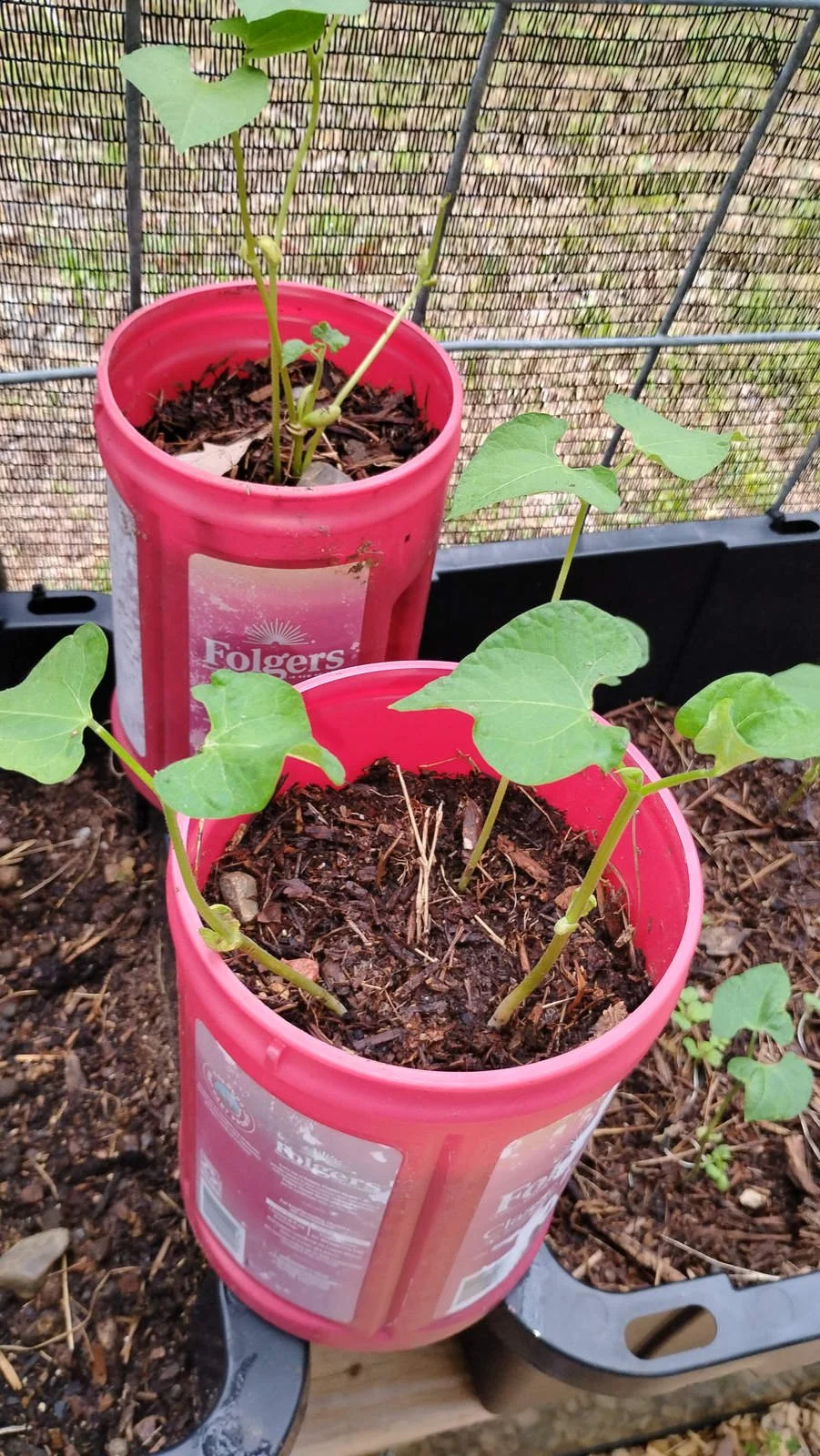
Bountiful Bucket™ of Pintos 🪴
The goal is to make growing food, herbs, flowers, and other useful plants more approachable, especially for folks working with limited space, limited funds, or less-than-ideal conditions.
What Are Bountiful Buckets?
Bountiful Buckets are approximately 35 to 45 ounces of our living soil, enriched by the Bunny BBs and composted materials produced here at T-Bone’s Place. There is not one morsel of store-bought dirt in these buckets. Instead, you may find remnants of hay, pine shavings, bunny leavings, and other roughage from the farm.
This is true living soil. It continues to break down, compost, and provide nourishment when added to soil at home. Each bucket carries a little piece of the farm with it, built from the same natural cycle we rely on every day: animals, bedding, compost, organic matter, patience, and time.
Bountiful Buckets reflect the rhythm of rural life, where healthy soil, steady hands, and seasonal intuition guide what grows. Each one is curated with intention and shaped by the traditions of homestead living. No two are ever exactly the same.
What you can count on is living soil with character, a touch of whimsy, and the grounded charm of a working East Texas farmstead. 🪴
Why We Started Growing in Buckets
We started growing in buckets because we were having phenomenal success sprouting in the greenhouse, even back when we were still using commercial soil. As we moved farther away from commercial soil over the past three years and leaned more into our own living soil, our sprouts and plants became stronger, steadier, and more resilient.
We also started harvesting longer each year. In fact, we did not clean out the last of our 2025 harvest until February of 2026, and even then, it was mostly because the greenhouse needed a refresh.
After seeing that kind of success, we knew we wanted to share it with friends, neighbors, and other growers who may be working with limited space or imperfect conditions. We wanted to share more than plants. We wanted to share the soil boost, too.
That is why we chose Bountiful Buckets instead of the typical cardboard starter pods or smaller individual seed-starting containers many growers use. The bucket gives the plant room to get started, and it gives the grower a little living soil to carry home, add to their own setup, and keep building from there.
What Goes Into a T-Bone’s Place Bountiful Bucket?
Here at T-Bone’s Place, we always have two working compost piles going.
For part of the year, we are adding rabbit manure, pen shavings, hay, and bedding materials from beneath the rabbit pens to one pile, then watering it liberally. The other pile is farther along. That one gets turned and watered, and the rich soil it creates at the bottom is used as needed.
This is not the same kind of soil you purchase in a store. At this stage, it does not smell like manure, bedding, or waste. It smells like clean dirt. It still has small bits of natural debris, which help keep it from clumping and compacting on itself.
When I build a Bountiful Bucket, I start with our farm-made living soil, built from rabbit manure, hay, pine shavings, leaves, pine straw, and composted materials from here at T-Bone’s Place. Once the soil is settled in and the seeds are tucked into place, I give them a big ol’ ladle of our house blend of Boot Rooster’s Root Booster™ drink mix. 😉
Drainage, Soil, and the “Don’t Drown the Roots” Lesson
We have learned through plenty of trials 🥴 and more errors than we can count that drainage matters. Around here, “don’t drown the roots” has become one of those lessons we had to earn the hard way.
The right moisture level is important for sprouting, but it also matters later as the plant grows, strengthens, flowers, and produces. We want our living soil to hold enough moisture to support the plant without creating soggy pockets that encourage mold, mildew, or root rot.
That is why we pay attention to the balance inside each Bountiful Bucket. The mix needs soil, fibrous plant matter, and small natural materials that help keep it loose and breathable. If the bucket holds too much water, the roots struggle, the plant flounders, and the whole growing system can fail.
Healthy roots need moisture, but they also need air. That balance is one of the biggest lessons our bucket-growing experiments have taught us.
Choosing What to Plant in Each Bucket
Here at T-Bone’s Place, we are working with heirloom seeds, many of which come from the best plants we grew the season before. Each year, we are learning to save more of our own “best of the best” seeds from each planting, so we can keep growing stronger, more reliable plants for feeding ourselves and sharing with others.
We are kind of proud of this. 🦚
Our Bountiful Buckets follow the rhythm of our growing seasons: Spring/Summer and Fall/Autumn. We usually offer three seasonal standard buckets, along with a mystery bucket that is farmer’s choice. The number of sprouts in each bucket depends on the type of plant. Some buckets may have three sprouts, while others may have two, depending on what gives the plant the best start.
The goal is not to force every bucket to be identical. The goal is to give each plant enough space, soil, moisture, and support to get established well.
We also try to keep these buckets practical and approachable. When individual starter plants at big box stores can run several dollars each, Bountiful Buckets give folks another option: farm-started plants, living soil, and a little piece of T-Bone’s Place to take home and grow from.
We are scheduling our Autumn sprouting now. If you are interested in what we are growing this season, you can give us a holler at hello@tbonesplace.com or visit www.tbonesplace.com.
How Bountiful Buckets Help With Budget-Friendly Growing
Bountiful Buckets help with budget-friendly growing because they give each grower more than just a plant start. Each bucket includes farm-started plants, living soil, and the added benefit of compost-rich material that can continue feeding the soil after it leaves T-Bone’s Place.
For folks trying to grow with limited space or a limited budget, that matters. A few carefully chosen buckets can help start a small garden without needing trays of individual starter plants, bags of store-bought soil, and separate amendments.
Each Bountiful Bucket may include:
• Plants started from heirloom seeds
• Farm-made living soil built from composted materials
• Multiple strong sprouts, depending on the plant variety
• Soil that can be added back into a larger garden bed, raised bed, pot, or container
• flexible growing setup for folks working with patios, porches, small yards, or imperfect growing conditions
When individual starter plants at big box stores can add up quickly, Bountiful Buckets offer another way to begin. They are built to give the plant a strong start and give the grower something useful to keep building with after the bucket goes home.
What We’ve Learned From Trial, Error, Weather, and Real Life
What we have learned from trial, error, weather, and real life is simple: it is almost never going to go exactly the way you expect it to.
Unexpected things will happen. Hard things will happen. Sometimes devastating things will happen. Then you pick up the pieces, learn what you can, and move forward a little better, stronger, and wiser than before.
We have been fortunate when it comes to major weather events and the greenhouse, but the greenhouse itself has still taught us plenty. Ours is not fully enclosed. It is open on the north and south ends, with 60% mesh stretched over the cattle panels for shade and protection.
That mesh has worked, but it has also taught us something. When we move the greenhouse later this year, we will likely replace the 60% mesh with 40% or 50%, depending on how much natural bright shade we have in the new location. We may even need to go lower. That is part of the learning process: watch what happens, adjust, and try again.
We have also lost the entire contents of the greenhouse once because of a health crisis. That one hurt.
Last summer, the greenhouse had reached its first true peak. It was full, thriving, and honestly, it was a sight to see. Then I had a health crisis that landed me in a hospital an hour away for a week. T-Bone was working 10-plus hour days, driving back and forth from the hospital to the farmstead to feed the animals twice a day, then coming to see me at night.
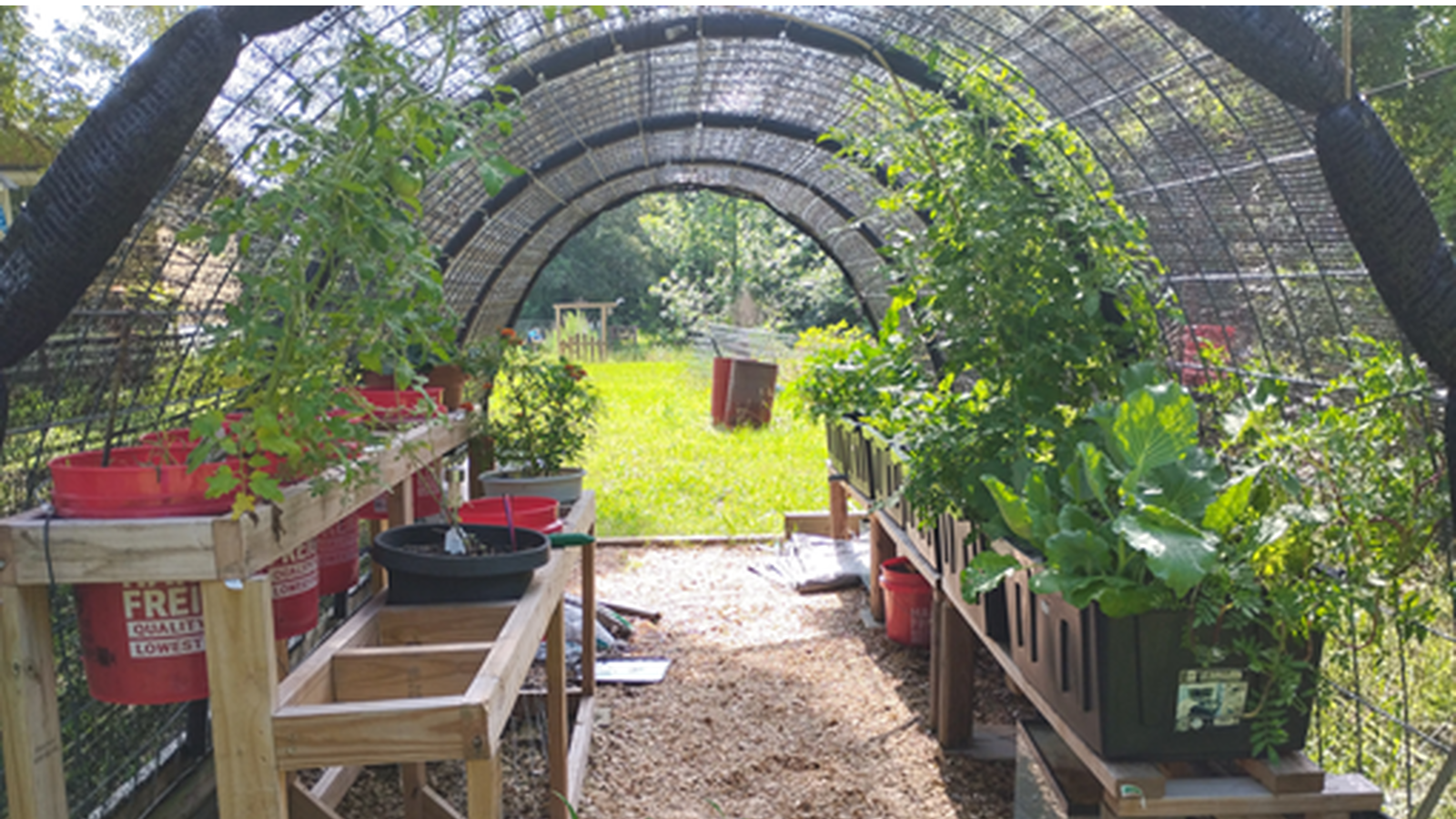
The greenhouse just prior to the 2025 health crisis.
We survived it, but the greenhouse contents did not.
That is real life.
When we were able to get back to it, we cleaned out what did not make it, prepped the space for fall, waited, and replanted in late June. Then we rode that harvest all the way through February of 2026.
That experience taught us a lot. We learned that herbs do not seem to grow happily in that greenhouse. We learned that overhead misters caused molding for us, but watering from the hose from outside the mesh every few days did not. We still do not fully know why, but we know what we observed.
That is the thing about this kind of work. The learning is never finished, and that is part of what makes it exciting.
That is really what Bountiful Buckets are built from: not just soil, seeds, and recycled containers, but seasons of trying, failing, adjusting, and trying again.
They carry a little bit of our greenhouse, our rabbitry, our compost piles, our weather lessons, and our real-life farmstead learning in each bucket. They are one small way we share what has worked for us, what we are still learning, and what can be possible when folks grow with what they have.
Bountiful Buckets are part of The Root Cellar at T-Bone’s Place, where we document real farmstead projects, greenhouse lessons, living soil experiments, rabbitry systems, budget builds, and hands-on homestead problem-solving from the ground up.
That is the heart of Bountiful Buckets at T-Bone’s Place.