Our Cattle Panel Greenhouse: Sentiment, Living Soil, and a Heck of a Learning Curve
The greenhouse here at T-Bone’s Place is special, and it carries a whole lot of sentimentality.
It originally belonged to my mom and dad. My dad built it years ago for my mom up at our family farm in Southeastern Oklahoma. After she passed away in 2022, no one wanted it, and it was starting to deteriorate, my dad asked if we wanted to bring it to our Texas house, and we said, “Heck yeah!”
That was three years ago, and let me tell you, it has been a heck of a learning curve.
Starting with the Frame
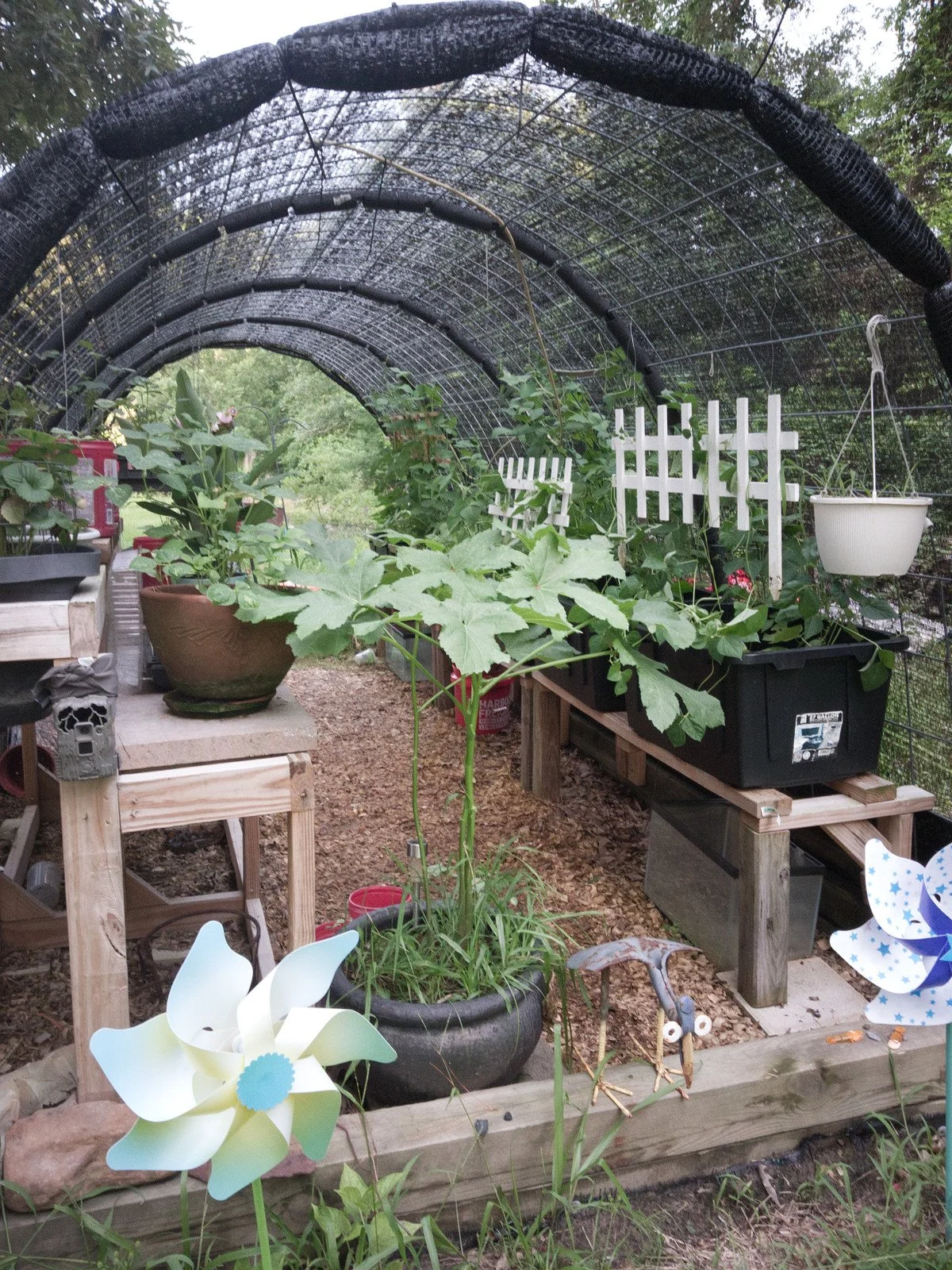
Our T-Bone’s Place greenhouse is built with cattle panels raised on stacked 5”x5” beams, giving us added height, a looser arch, and more usable width for raised growing totes, plants, and easier access.
First, we used 5”x5” beams and stacked them two-high before we installed the cattle-panel hoops for the greenhouse.
These beams were cut from timber off my Oklahoma family land and sawn by my dad on his personal sawmill, which just adds even more fondness to this whole project.
That stacked frame gave us an additional 10” in height down the center, which was ESSENTIAL because T-Bone is 6’5” tall. We also gained some width because the cattle-panel arch was able to loosen instead of being pulled into such a tight hoop. I cannot give you an exact measurement there, but we estimate we gained approximately 10-12” in width.
The total dimensions of our greenhouse are:
9’w x 6’10”h x 16’l
Making It Work for Us
When my parents had the greenhouse in use, they implemented a system of shelving and used different pots and growing methods, many of which were on the ground.
Bending is just not something that is possible for me on a regular basis anymore. I simply have too much hardware installed in my spine.
T-Bone has gone above and beyond here on the farmstead, deploying new methods and creating accessibility for me for growing everything from the rabbits to the plants here on the farmstead. He has enriched my life in EVERY way, EVERY day.
Preparing the Floor
Before we laid the 5x5 frame, we put down a layer of weed barrier. Then we spread one yard of sand and six bags of pine shavings.
We have never had to add to or change the interior greenhouse floor in the last three years. This flooring we laid retains moisture, without molding, and helps give the greenhouse a rainforest effect.
We also put a 60% shade net/mesh over the cattle panels at the onset, three years ago, and it is still going strong. I can tell you now that I wish I had gotten 40-50% instead, and when we move the greenhouse later this year, I will most likely be making that change.
Building the Tote Growing System
Next, we built a two-foot-high frame down the entire length of one side of the greenhouse and anchored it to the cattle panels and the 5x5 frame.
We went to Sam’s and got six of the 27-gallon totes, drilled holes in the bottoms for drainage, and anchored them to the frame.
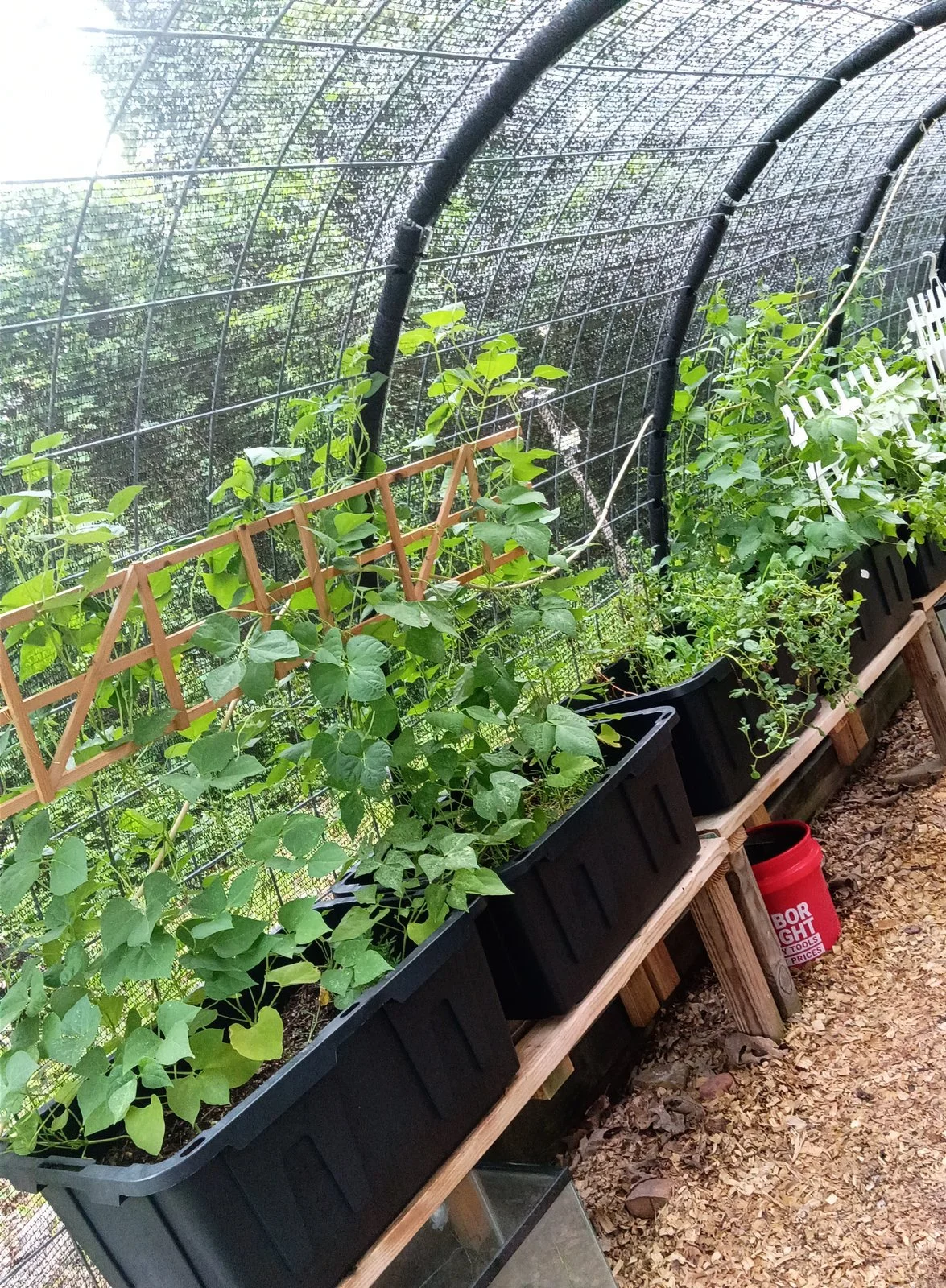
Inside the T-Bone’s Place greenhouse, where our DIY tote growing system uses 27-gallon containers filled with homemade living soil. This 2026 Spring/Summer setup is growing 30+ Pinto Bean plants and 8 Yukon Gold Potato plants across six totes.
This was an easy DIY project, and it made a big difference in accessibility and productivity.
Year One: Building Soil from Scratch
That first year, we didn’t have any composted dirt yet. So, our goal was to create the most organic soil we possibly could.
We used:
coconut coir
composted manure
pine bark fines
I used banana peels to create potassium-infused water for my plants. I baked eggshells and introduced them to impart calcium and raise the pH. The shells also helped improve drainage and feed microbes.
I don’t remember having that many growing-wins the first year, but the soil-wins were huge!
Year Two: We Had Our Own Dirt
By the second year, we needed to add soil to start the Spring season, and we had our OWN!
We FINALLY had our very own living soil, composted from rabbit manure, their dirty bedding that we remove when we clean their pens, and the shavings from beneath their pens when we clean that space out. All of that was compiled, turned, and worked until it composted down into a rich, luscious soil fit to grow just about anything in.
So, we added our own living soil to the first-year dirt and started growing.
Everything took off like a shot, and it was going to be incredible.
Then I had an injury and ended up in the hospital for a week, and we just lost everything. 🥴😭
It was really sad. I didn’t want to grow anything for a long time after that.
Year Three: Finally Filling It Up
This is our third year, and we had plenty of composted soil to fill each tote to the brim.
We also filled a bunch of 43-ounce coffee cans and are sprouting in them for locals. (Bountiful Blessing Buckets!) The soil in them is great for use as a root booster or general fertilizer.
We have over thirty Pinto Bean plants growing in our 27-gallon totes this 2026 Spring/Summer season.
On the opposite side, we have a few strawberries, some more Pintos, a Siam Tulip, three Okra, a few peppermint plants, and we sprout in this area as well.
What We Hope to Do Next
In the future, we hope to expand our current greenhouse by cloning it.
We also want to incorporate hydroponics and aquaponics into our growing methods.
We have a few upgrades planned soon, too. We are going to install automatic waterers on timers, and that new fodder rack is coming soon as well.
So stay tuned!