Ball Jars: From Wooden Cans to the Stars, Part Three
Missed the beginning?
Read Part One: From Wooden Cans to a Glass Empire, 1880-1909.
Read Part Two: Ball Becomes an Industrial Network, 1910-1929.
Part Three: Depression, Antitrust, and the Road to Aerospace, 1930-1956
By 1930, Ball had become far more than a fruit-jar company.
Its network of glass plants, closures, rubber seals, paper products, machinery, and commercial packaging helped keep the company moving through the Great Depression and another world war.
But the old way of doing business could not continue forever.
Part Three follows Ball through the Depression, the purchase and closure of Three Rivers Glass Company, the federal antitrust case, the changing postwar household, and the company’s unexpected road from jars to the stars.
Table of Contents:
11. Surviving the Great Depression
12. Three Rivers Glass Company
13. The Antitrust Case
14. A New Postwar Business Model
15. From Jars to the Stars
Ball’s diversification across home-canning glass, commercial glass, closures for both, rubber seals, paper products, packaging, and more kept the lights on and the furnaces burning throughout the Great Depression and yet another world war.
As the company neared the mid-1930s, some of the older brothers had died, leaving only George and Frank to carry on the leadership.
The company didn’t falter because the brothers had established plant managers, sales leaders, laboratories, and a real corporate structure. That maturity carried Ball through.
The year 1933 also saw the next big logo reveal, and this is the one that MOST collectors and non-collectors alike recognize as the old-style logo.
It is the first fully connected, flowing script version of the Ball logo that most folks know today.
Ball purchased the Three Rivers Glass Company in 1936. This was its only major Depression-era purchase.
The Three Rivers Glass Company had annual bottle sales in the range of half a million dollars in 1929, at the beginning of the Depression.
It is thought that Ball waited until Three Rivers went into receivership and lost its value because the smaller Texas company was deliberately undercutting all its competitors. Even when other fruit-jar companies were selling at or near the same comparable price points, Three Rivers Glass Company was deliberately coming in so far below them that no one could remain competitive.
The Ball brothers waited until they saw the smaller company struggling in 1936. They obtained the property, machinery, patents, and other assets for a mere $80,000 and completed the company’s outstanding orders.
Ball then shuttered the plant.
By 1942, the courts had ruled against not only Ball, but also other major players in the glass world, including Owens-Illinois, Hazel-Atlas, Hartford-Empire, and Corning, in an antitrust suit.
The final decision was handed down by the Supreme Court in 1945 against the defendants.
Three Rivers may not have started the antitrust investigation, but buying the struggling price-cutter, filling its remaining orders, and then dismantling the operation gave investigators a near-perfect example of everything that had gone wrong in the glass industry up to that point.
The post-World War II business world was a totally different environment for Ball.
Not only had the company lost its founding brothers, but it had also lost the ability to keep moving forward into the next era of its life cycle in the same manner it had for the previous 50 years.
The antitrust ruling forced Ball to change its business model and modus operandi.
The canning jar was no longer at the center of the home when it came to food preservation after World War II.
In a postwar home, refrigeration was the new thing, and it made keeping food stable and fresh for longer periods easier for more and more people.
The next generation of research and development began in earnest in the mid-1950s.
Ball Brothers Research Corporation was founded in 1956 in Boulder, Colorado. Physicists at the University of Colorado worked in conjunction with Ball on precision instrumentation, vacuum-related technologies, optical and scientific glass, mechanical control systems, tight-tolerance manufacturing, and other specialized work.
That work eventually led Ball to contracts in the newly formed aerospace sector and close ties with NASA.
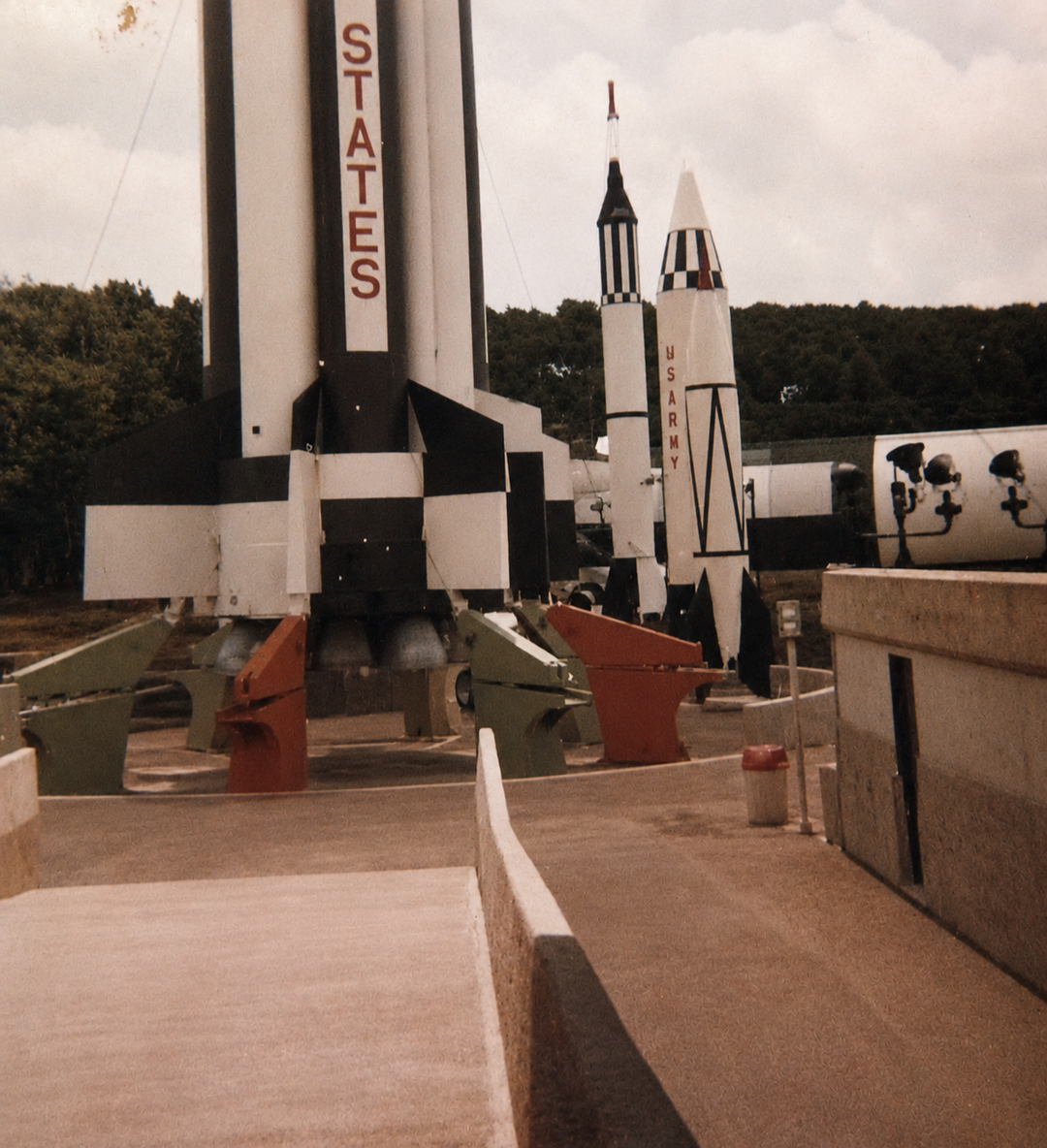
Skylab I on the launchpad
This is a snapshot I believe my mom took of the Skylab I on the launchpad. We got to visit and see it as a family before it launched. My father worked extensively for Ball Brothers Aeronautical Division on the cameras for NASA.
Ball would go on and plot-twist its future into something new and meaningful in the stars, not just something to be kept locked in jars.