Ball Jars: From Wooden Cans to the Stars, Part Two
Missed the beginning? Read Part One: From Wooden Cans to a Glass Empire, 1880-1909.

My half-gallon Schram fruit jar, now holding my wedding bouquet.
By 1910, Ball was no longer simply a growing fruit-jar manufacturer in Muncie.
The brothers had spent the previous decades buying factories, machinery, molds, and competitors. Now, they began knitting those pieces together into something much larger: an industrial network capable of producing the jars, closures, seals, packaging, and machinery needed to supply home canners across the country.
This is Part Two of Ball Jars: From Wooden Cans to the Stars.
Part Two: Ball Becomes an Industrial Network, 1910-1929
Table of Contents:
6. Consolidating the Empire
7. Expansion into Texas
8. World War I and the Rise of Home Canning
9. From Ball Brothers Glass Manufacturing Company to Ball Brothers Company
10. Schram, Drey, and the Closure Business
The next couple of years were more about consolidating the considerable assets Ball had accumulated up to this point.
When we say assets, we are not just talking about the brick-and-mortar buildings. Here is a simplified list of some of the things we are talking about:
• Glass formulas and manufacturing knowledge
• Jar molds and closure designs
• Furnaces, tanks, presses, and automatic machines
• Existing sales contracts
• Distribution territories
• Experienced glassworkers and mechanics
• Recognized regional jar brands
• Factories positioned near fuel, raw materials, railroads, and customers
In 1913, Ball bought the Texas Bottle Company of Wichita Falls, Texas. This was its only clearly documented acquisition during the 1910-1920 era.
Ball brought in and repurposed equipment from the Coffeyville, Kansas, plant it had purchased and dismantled earlier.
The Wichita Falls plant placed Ball farther south and west, in markets it had previously been unable to serve easily and readily. There were established rail lines, fuel supplies, workers, and customers that would have been expensive to serve from the Indiana plant.
Ball was one step closer to becoming a coast-to-coast company.
1914-1918: War Opened New Doors
America didn’t enter the First World War until 1917, but by the time we entered the fray, growing and preserving our own food was considered an “American duty” or “patriotic” in some way.
“War Gardens” or “Liberty Gardens” were promoted beginning in 1917, and preserving the food through home canning was widely and heavily promoted by the United States government.
Ball wasn’t pushing this idea or concept. The company just so happened to be ideally positioned to profit from it.
Ball had positioned itself quite gloriously because, by this juncture, it was no longer just a fruit-jar company. It was a network.
Over the years, Ball had transformed the canning jar into a piece of kitchen hardware. Now, in wartime, that jar was being asked to support an entire nation.
The Ball jar was being asked to support household food security, reduce food spoilage, provide safe home food storage, and preserve seasonal abundance for families throughout the year.
And it came through in every aspect.
Ball had the jars, seals, metal lids, and everything home canners needed to provide safe, secure food in their pantries.
The reason Ball could provide all of this was that it had created a network of companies within the Ball Brothers system to provide everything it needed to be self-sufficient.
In 1922, Ball removed the word “Glass” from its official name, changing it from Ball Brothers Glass Manufacturing Company to Ball Brothers Company.
This was significant because the company was no longer just about glass jars. It was involved in:
• Glass containers
• Metal closures
• Rubber sealing components
• Paper packaging
• Machinery
• Commercial bottles and jars
• Other industrial products connected to packaging
This new name left room for even more growth on the horizon.
In 1925, Ball acquired the Schram company.
This was an important one because Schram had its own closure mechanism. I own a half-gallon Schram, but unfortunately, the lid is missing. 🥴😭 I look every time I am out somewhere that has jars!
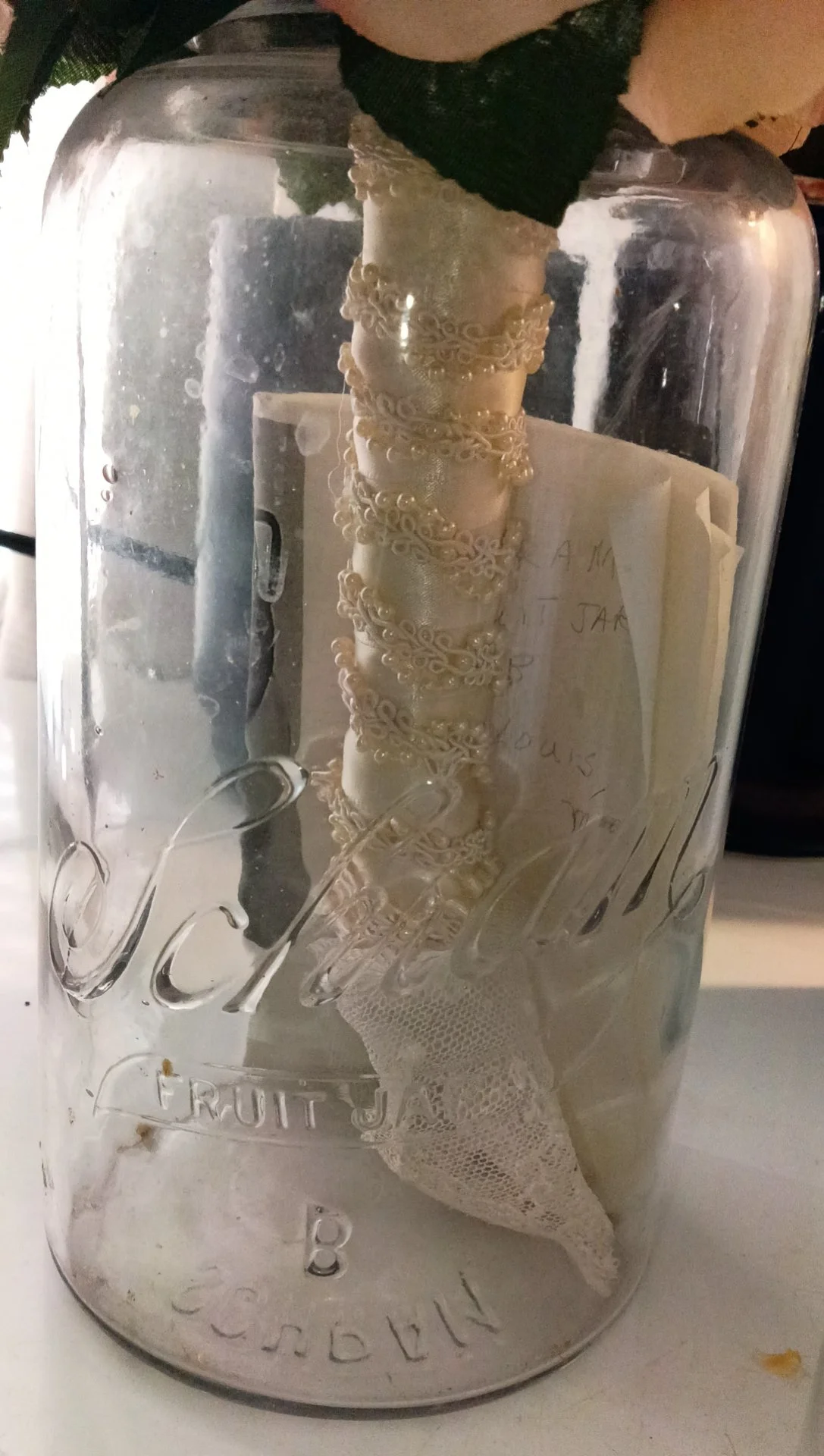
My half-gallon Schram fruit jar
Now holding my wedding bouquet… The original lid is missing, and yes, I still look for one every time I find myself somewhere with old jars.
Anyway, Schram could sell and resell its own lids, seals, and jar accessories, bypassing the need for anything Ball might have to offer. This made it a rival that Ball needed to take out, which is why its facilities and jar-and-lid operations were purchased on November 7, 1925.
Note: The Drey jar line was a product of Schram, and therefore, Ball acquired it at the same time. Leo Drey was president of the Schram Automatic Sealer Company, and he died in 1920.
Ball continued producing the Drey line until about 1930. Over the next few years, Ball also used the square mold and other components of the Schram and Drey systems in the Ball line until the lines blurred seamlessly and Ball was all that was left in consumers’ memories