What is Fodder & Why are we growing it?
“Though I do not believe that a plant will spring up where no seed has been, I have great faith in a seed.”
— Henry David Thoreau
That is where this whole fodder experiment starts for us too: with a seed, a rinse, a jar, a tray, and enough faith to see what it can become.
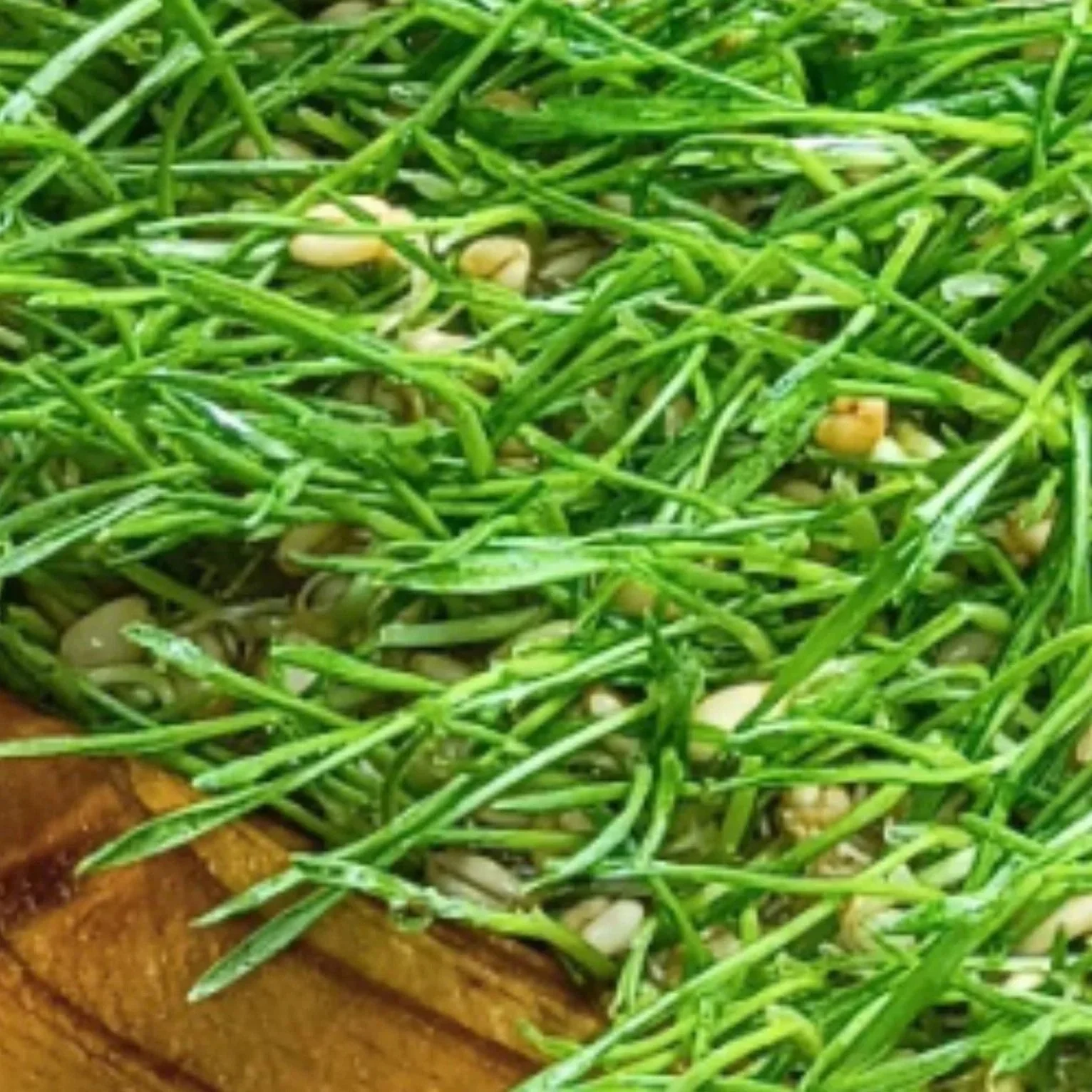
Our First Wheat Fodder
This was one of our early wheat fodder batches, grown from soaked berries into fresh green feed for our rabbits. It helped us learn how quickly fodder changes from seed to sprout, and what worked and didn’t as we rebuild the system.
Table of Contents
1. What Is Fodder?
2. Why We Started Looking at Fodder
3. Why Hard White Wheat Makes Sense for Our Rabbitry
4. What the Feed Cost Looks Like
5. Moving Away From Pellets, Carefully
6. Feed Safety: Knowing What Touches Their Food
7. Closer to Organic Methods, Without the Organic Label
8. Final Thoughts: We Are Growing More Than Rabbit Feed
1. What Is Fodder?
I wanted to see just how far back the word “fodder” actually went, because I figured that would tell me a lot about the concept itself. And wow. I knew the idea was old in theory, but this is not just “old-fashioned.” This word reaches way back into Old English, before about 1150 AD, and possibly as far back as the early Old English period around the 400s.
The word itself traces back through Old English and Proto-Germanic, with the basic meaning staying rooted in food, feed, hay, straw, or bulk food for livestock.
So no, we are not inventing something new here. We are not getting all woo-woo or space-age. In a way, we are going back to our roots.
At its core, fodder is feed. In our case, we are talking about sprouting seed into a fresh, living mat of roots and green growth that can be fed to rabbits and other small farmstead animals.
This is the beginning of the fodder project at T-Bone’s Place, not the polished final version. Right now, some of our photos may still look like jars of soaking seed and tiny root tails instead of big, beautiful green mats. That is okay. That is where the process starts.
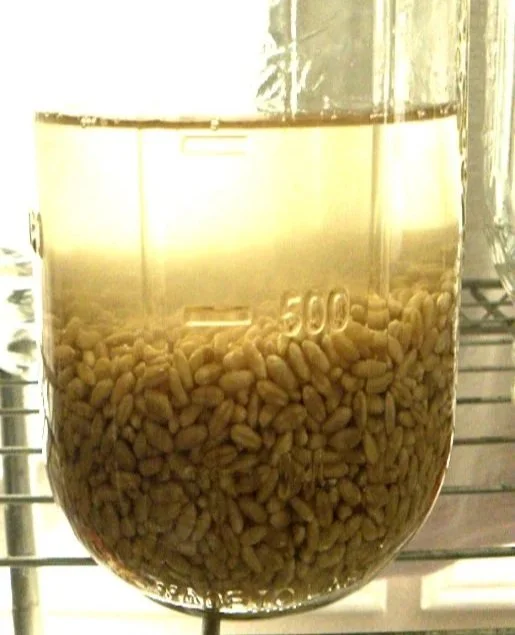
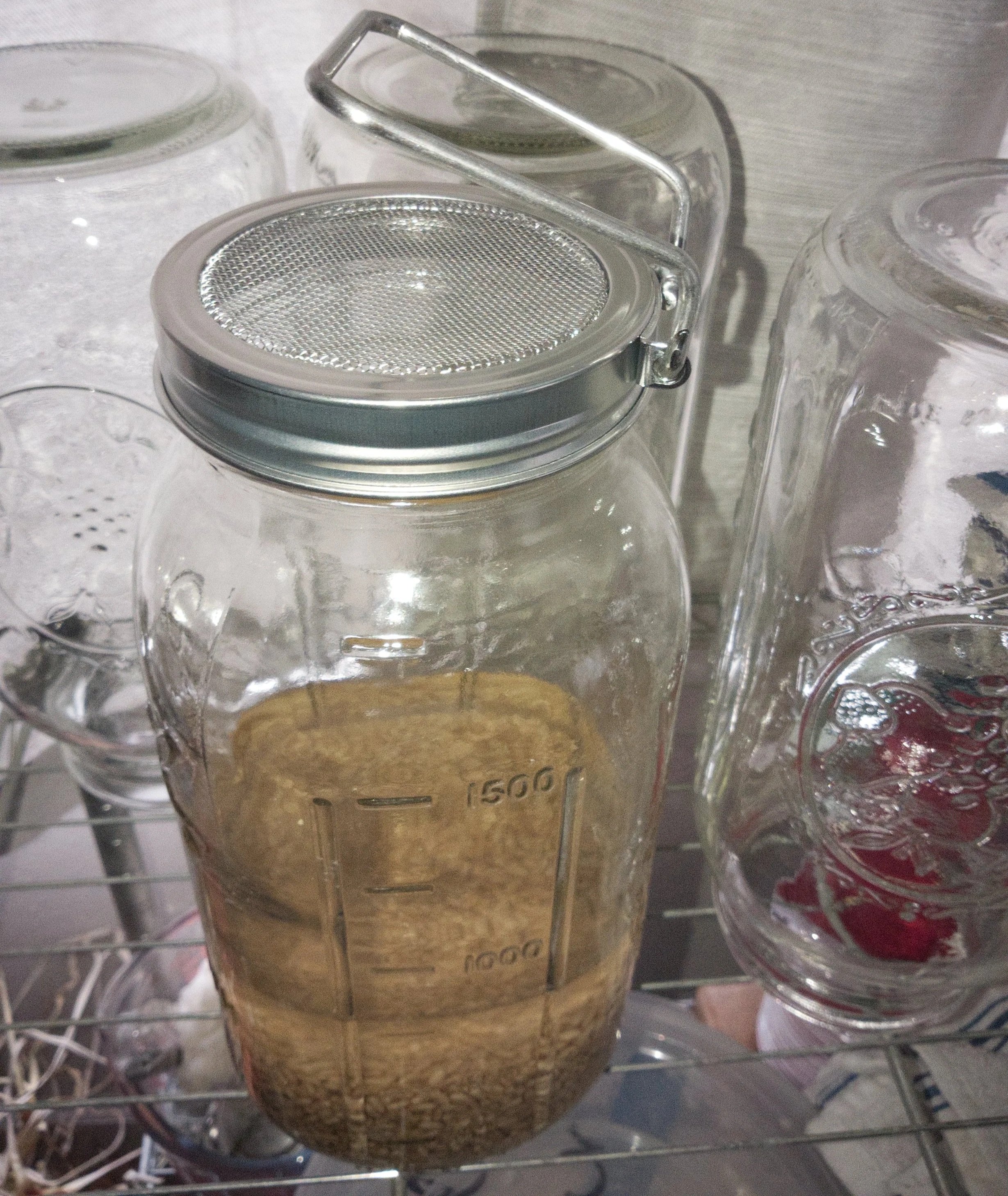
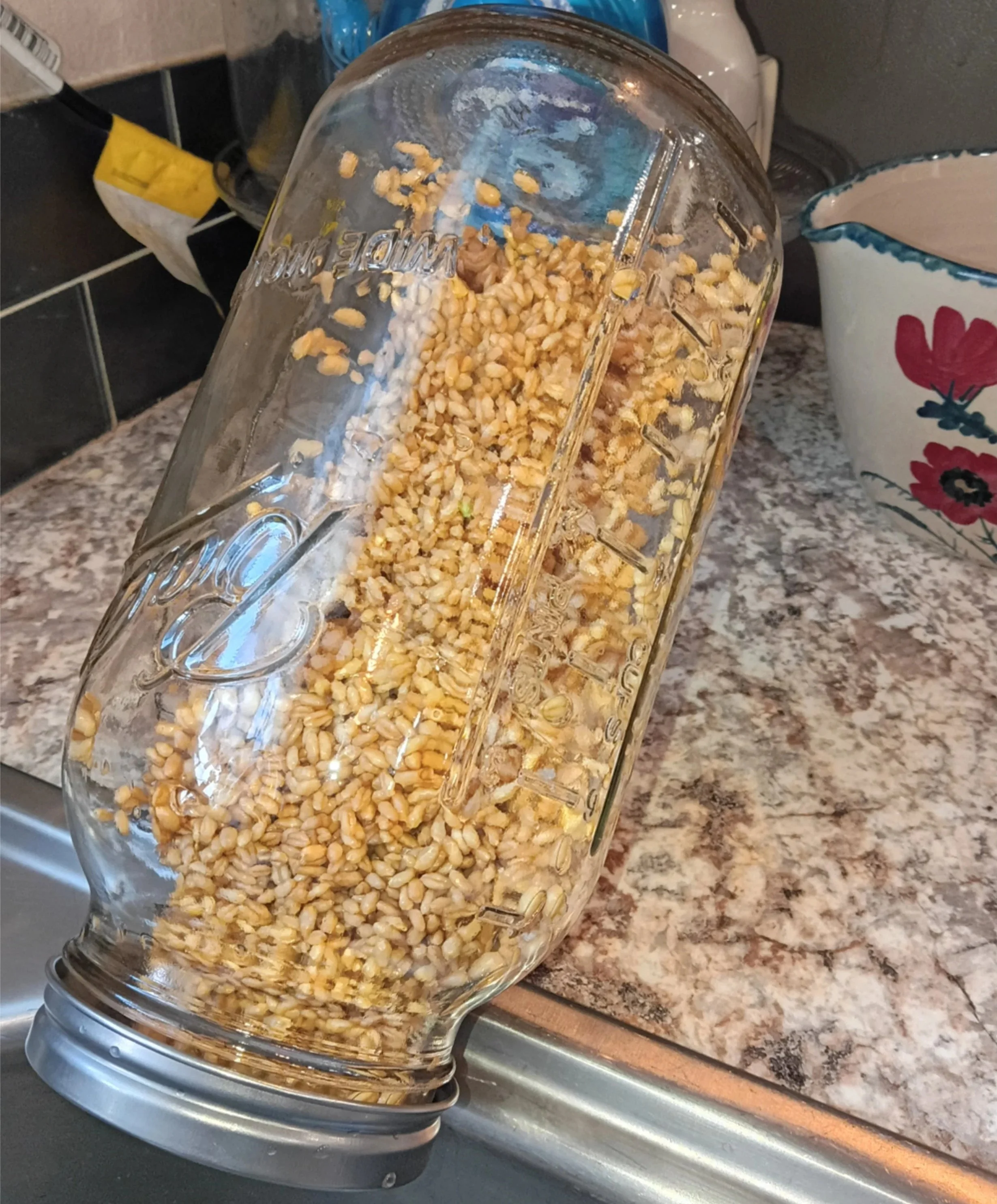
As the wheat grows, we will keep documenting it. The goal is not to make this look perfect on day one. The goal is to learn the system, feed the rabbits well, spend less where we can, and show the real process from seed to sprout to fodder mat.
2. Why We Started Looking at Fodder
We have been tossing this idea around for over a year now. The concept of healthier food is becoming more mainstream all the time, and it is one of the reasons we are raising rabbits and growing food in the greenhouse to begin with. We want to know what we are putting on our table at the end of the day.
With that being said, we also want to know what we are putting into our greenhouse and into our rabbits. We like to think we treat our Bits with love, kindness, and respect while they are here at T-Bone’s Place. We even spoil them a little bit.
This is not about cutting care down to the bone. It is about building a better system. Our rabbits get pellets, hay, sweet potato bites, pen-side roses, greenhouse trimmings, seasonal forage, oak sticks and safe chew items, and clean water. The question is whether we can reduce purchased-feed dependence without reducing the quality of care.
Right now, pellets are not bothering us only because of price. They are bothering us because of the ingredient trail. Middlings, hulls, DDGS, byproducts, molasses, vegetable oil, and vague fiber sources may all have a place in the feed industry, but we are no longer sure we want our rabbitry depending so heavily on ingredients we did not choose and cannot fully trace.
3. Why Hard White Wheat Makes Sense for Our Rabbitry
Barley is often the grain people recommend first for hydroponic fodder, especially when rabbits are involved. That does not mean wheat is useless or unsafe. It means barley has a longer track record, sprouts reliably, forms a good root mat, and has more rabbit-specific feeding research behind it.
Hard white wheat may still grow into a perfectly usable fodder mat, especially if it is clean seed, sprouted properly, and introduced slowly. But even if barley and wheat are both grown to the same height, they are not automatically the same feed. The seed, root, shoot, moisture level, and digestibility all still matter.
So, for us, while barley might be the more recommended and known starting point, after a lot of reading and comparing, we feel like hard white wheat gives us a strong starting baseline. From there, we can test it carefully and let the rabbits, the fodder mats, and the results tell us what actually works at T-Bone’s Place.
Here is the short macro snapshot we are looking at for a 50 gram serving of fresh wet fodder mat. This would be a maintenance-size comparison serving, not the final full ration for every rabbit in every season.
| 50g Fresh Wet Fodder Mat | Barley Fodder Mat | Hard White Wheat Fodder Mat |
|---|---|---|
| Fresh amount fed | 50 g | 50 g |
| Water | about 44.75 g | about 41.53 g |
| Actual feed matter | about 5.25 g | about 8.47 g |
| Crude protein | about 0.78 g | about 1.30 g |
| Fat | about 0.19 g | about 0.39 g |
| NDF fiber | about 0.68 g | about 2.55 g |
| ADF fiber | about 0.41 g | about 1.56 g |
Tiny fiber note: NDF is the broader “bulk” fiber number. ADF is the tougher fiber number. Together, they help us understand how much plant structure and roughage is in the feed.
Looking at this comparison, you may be able to see why we are leaning toward hard white wheat as our rabbitry’s fodder choice.
In the macro categories we are watching, hard white wheat appears to hold its own very well against barley. Barley is often recommended for hydroponic fodder, but a big part of that preference comes from the root mat it produces. Barley tends to create a thick, strong, woven mat that is easy to lift, cut, and feed in this kind of system.
Hard white wheat grows a little differently. Its root system is finer, more like wheatgrass, so getting it to form that same carpet may take the right seeding rate, good drainage, and a little finagling. And honestly, that is fine with us.
If hard white wheat gives us the nutrition profile we want, fits our household better, and can still be grown into a clean, usable mat with a few adjustments, then it makes sense for us to test it seriously instead of choosing barley just because that is what most fodder systems default to.
4. What the Feed Cost Looks Like
The cost side matters too. This estimate is based on 3 adult rabbits, with Patches and Gloria each having 3 litters per year, averaged at 8 kits per litter. Some litters may be larger and some may be smaller, but 8 gives us a reasonable working number for blog math.
This also does not represent bare-minimum feeding. Along with Big V pellets, Timothy fiber, and Alfalfa hay, our rabbits also get daily sweet potato bites, safe rose leaves and petals grown beside their pens, greenhouse trimmings, and seasonal forage as available.
The sweet potatoes are either purchased from local farmers or bought organic on sale, and we try to keep them at no more than $1 per potato. Each potato is kept around 1/2 pound and cut into bites to be distributed among the rabbits.
| Feeding System | Estimated Annual Purchased Feed Cost |
|---|---|
| Current pellet-based system | about $1,122 |
| Half pellet / half fodder transition | about $966 |
| Fodder-forward system | about $785 |
These are working estimates for comparison, not a promise that every rabbit setup will cost the same. Feed needs, prices, seasons, waste, seed quality, and local supply all matter.
This is the short version of the math. We are not pretending fodder is free, and we are not pretending wet fodder is the same thing as pellets. Seed, water, time, setup, and chores all count. But when we look at the annual numbers, even a partial transition away from pellets could matter.
For us, the goal is not to feed less. The goal is to feed well while reducing how much of our rabbitry depends on purchased pellets.
We also co-use our wheat berries in the household, so the wheat berries are not only a rabbitry expense. For clean math, we can count them at full fodder cost. In real life, they are more of a shared staple here, and the true rabbit-feed cost depends on how much of each bag becomes fodder and how much is used in the kitchen.
5. Moving Away From Pellets, Carefully
Just as with any animal, transitioning gradually to this new feeding system is going to be crucial to our success.
We chose summer to begin the transition because we do not breed our rabbits in the summer. There are several reasons for that, including the heat. In the South, high temperatures can disrupt a breeding program, and that is all I have to say about that.
We do not have any babes on the wire right now, only our three main breeders. I know their behaviors, personalities, and habits, so watching for anomalies should be easier.
During the transition, we are watching weight changes, temperament changes, uneaten cecotropes, poop condition, coat condition, hay intake, water intake, wet feet, hock health, and how each individual accepts the fodder.
Arnold is our pure-bred Californian. He is a thick boy by nature, so we need to make sure his feet stay dry and he does not gain too much. He is still young and still growing, so his nutrition has to be watched tightly.
Patches is a TAMUK, and I know my girl. She is feisty and fussy. She does not love change, but she is a fiend for her greens. We will have to watch her weight like we put her on the Program. She needs to keep her coat sleek, her feet dry, and her cool through the summer until baby-making season.
Gloria is our little wildcard. She is ½-Californian and ½-TAMUK, and somehow she came out solid black. Her daddy was a Grand Champion Californian, and Patches is her mama, so there are some special genetics going on there. We lost her Papa, Sir Charles, after he injured himself playing in his pen, so that line means a lot to us.
Gloria is handling the heat better than we anticipated, and that may be some of her TAMUK side showing. We are still watching her as Gloria, not assuming she will respond exactly like a “California-Girl” or exactly like Patches.
Once the rabbits are through the transition, our goal is not to just replace pellets with one wet fodder mat and call it done. The feeding system we are building is broader than that. The wet hard wheat fodder gives us fresh sprouted grain nutrition and helps contribute protein. The Timothy fiber gives them grass-hay structure. The Alfalfa hay gives them pulling and foraging. The rose leaves, fresh greens from the greenhouse, oak sticks, and safe forage add variety, chewing, and natural browsing. Sweet potato bites stay as whole-food supplements, not the foundation of the diet.
6. Feed Safety: Knowing What Touches Their Food
Our rabbits do not need mystery filler to get fiber. We may not be growing the Timothy and Alfalfa ourselves, but we can choose the source, inspect the quality, smell it, feel it, watch how the rabbits respond to it, and ask the hard questions about how it was grown, stored, handled, and tested.
Because clean loose Timothy hay is not something we feel sure we can source locally all the time, and it can’t be grown in the South, we are looking at 100% Timothy cubes as a possible solution. In our system, those cubes would not be the only chewing or foraging material the rabbits get. They still have Alfalfa hay for pulling and working through, plus oak sticks and other safe chew items in their pens for boredom and dental wear. They also get pen-side roses, greenhouse trimmings, seasonal safe forage, and fresh wet fodder portions.
So the Timothy cubes would have a specific job: give us a clean, consistent Timothy-based fiber source that is easier to store, easier to source, and easier to verify than random loose hay.
What we want is simple: one ingredient, Timothy grass hay. No molasses, no vegetable oil, no grain byproducts, no mystery binders, and no vague “forage products” label that does not tell us what is actually in it.
For us, fresh hard white wheat fodder, carefully sourced Timothy fiber, Alfalfa hay, pen-side roses, greenhouse trimmings, safe forage, and measured whole-food supplements make more sense than relying so heavily on a pellet built from ingredients we did not choose and cannot fully trace.
Once the fodder mat is ready, we will cut it into portions before feeding. We are still deciding whether those chunks will go directly on the wire or into dishes. Putting the fodder straight on the wire may allow more airflow around the wet mat pieces and help keep moisture from pooling. Using dishes may help retain more moisture in the fodder itself while keeping the feeding area more contained.
Either way, the goal is fresh wet fodder without wet feet. We want the rabbits getting the benefit of moisture-rich feed without sitting or standing in damp bedding, soggy feed, or a wet mess. That matters especially for heavier rabbits, because clean, dry feet help protect their hocks.
With fans already moving air across the rabbits, fresh wet fodder may also give us a small natural cool-cell effect. Air moving over moisture can help create a cooling effect, and wet fodder brings that moisture into the feeding area once the mat is cut and portioned. It is not a replacement for shade, fans, clean water, or heat management. It is one more reason wet fodder makes sense for our rabbitry.
7. Closer to Organic Methods, Without the Organic Label
To legally say something is certified organic, a farm does not just get to say, “We grow things clean.” There is a whole process behind that label.
A certified organic operation has to follow USDA organic rules, choose an approved certifying agent, submit an Organic System Plan, pay the required fees, keep detailed records, allow an on-site inspection, and renew that certification year after year.
That means the certifier is not just looking at one pretty mat of fodder. They are looking at the seed source, the feed process, the water, the equipment, the storage, the animal care, the records, the cleaning methods, and whether the whole system follows organic standards.
That is why we are not claiming organic.
We are not certified organic, and we are not trying to use that label. We are choosing cleaner, more hands-on methods because they make sense for our rabbits and for T-Bone’s Place. At this stage, we are simply not interested in taking on the red tape, paperwork, yearly oversight, and certification process required to use that word on one product line.
When we look at the whole picture, the ROI just does not seem to be there for us right now. We can always revisit the matter later, especially as we move closer to producing more of their feed in-house and building a system that already leans toward cleaner, more transparent practices.
8. Final Thoughts: We Are Growing More Than Rabbit Feed
We have been looking at this system, at the changes we want to make, and where we can gain the most positive ground in our rabbits’ overall health and happiness while saving the most in our pocketbook at the same time.
Is this transition going to be simple and quick? If we are 100% honest, and that is how we roll around here, nope. We seriously doubt it. Nothing worth the doing ever is. I am sure we will have to twist this plot a couple of times before we get it just right.
We have planned our work and now it is time to work our plan. Subscribe and come along as we transition from pellets to fodder at T-Bone’s Place.